Synthetic biology widens the ambition to the design of organisms: microbes engineered as biosensors or as factories for medicines and materials; cells induced to form tissues and organs; whole genomes synthesised rather than edited. Pathogen biology maps how infectious agents enter cells and cross species barriers, creating novel biology as they both generate and circumvent defensive strategies. Fungal biology opens a barely-catalogued kingdom whose networks and symbioses offer new routes to materials, medicine and ecological repair. Quantum effects in biology probes whether living systems exploit coherence, tunnelling and entanglement in processes from photosynthesis to avian magnetoreception, and whether living matter might harbour quantum hardware of its own. And the science of the origins of life reaches back towards the chemistry from which biology emerged, no longer only to reconstruct the required transitions but to rebuild them – or detect their emergence elsewhere.
What unites these topics is a shift in how science relates to life. Biology was long an observational science, describing the living world as it is. Now it has become an interventionist one, and we no longer only read the living world, sometimes unendingly (as in quantum biology, where observation keeps outrunning description): we increasingly edit it, and in places add to it. But life is not an ordinary technology, if a technology at all. Artifacts can in principle be recalled, discontinued, or left to decay; left alone, they typically cease to function. Living systems do not. They reproduce, mutate, spread, exchange material, and enter bodies and ecosystems. And where artifacts and machines serve functions by design, organisms, once brought into being, maintain themselves towards ends arising from their own biological organisation. They are also participants in evolution – a process that ran for four billion years without us, then produced us, and which will now absorb whatever we do and move it forward.
What that interventionist shift produces is something our vocabulary had no place for. One word – “natural” – has long done two jobs at once, describing where a thing comes from – evolution or manufacture – and what it is made of. Separate the two, and a third category appears: the synthetic, made by us yet realised in life’s own materials, and so genuinely alive. Some synthetic organisms imitate existing life; others do not. What marks them all is the absence of natural “parentage”: a synthetic organism is a being with no unbroken evolutionary lineage, whose causal history runs through deliberate design rather than through descent alone. Whether being thus made transforms what is owed to a living thing – and if so, how – is a question our ethics, practices and institutions have never had to face at scale, and one our inherited concepts for life “as we know it” cannot answer.
Who are we, as humans?
The same concepts falter when we turn them on ourselves. Modern biotechnology has changed what it means to know ourselves. Recombinant DNA rendered the boundaries between species negotiable. IVF moved fertilisation into the laboratory. Genetic testing made it possible to infer future disease susceptibility before symptoms appeared. Gene therapy and genome editing now promise to treat conditions once understood as fate. Each expands human agency, and each unsettles an older distinction: if nature can be engineered, what counts as “natural”? If life can be manufactured, what counts as “living”? If embryos can be modified, which are the defensible lines between care and control? Somatic editing, which alters the body’s own cells, can be understood as medicine when it treats severe disease. Heritable editing, which reaches sperms, eggs, embryos, or the cells that produce them, is different, however: it risks turning present social preferences into future biological conditions (see “Augmenting Human Potential”). The same techniques can serve therapy, enhancement, exclusion, or optimisation, and nothing in the science itself settles which of these to pursue.
Public and scholarly debate tends to answer with one of two narratives. The first is Promethean: that scientific ingenuity grants humanity god-like powers to remake both nature and ourselves. The second is almost its mirror image: that technological progress acquires a momentum of its own, leaving us unable to resist the lure of innovation. Juxtaposed, these reveal a deeper modern anxiety: we oscillate between seeing ourselves as sovereign authors of technoscientific futures, and as passengers carried along by forces beyond our control.
Neither describes where we actually stand, which is inside the process. Seen from there, engineering biology does not redefine what it means to be human, because humanity has never been a settled definition. If the meaning of “the human” is continually deferred rather than secured by a fixed essence, then humanity is less a complete state than an ongoing accomplishment (see “Augmenting Human Potential”). The science of the origins of life makes the same point at the longest timescale available: the molecular form that life took was one contingent outcome among others the early chemistry might have reached. Ask what we essentially are and biology returns a history, not an essence. The question, therefore, is not what engineering biology will make of us, but what we will choose to make of ourselves through it.
How can we live together, as societies?
The choice, however, is collective, and collective judgement has a history here. The 1975 Asilomar conference, the most famous (and still contested) example of scientific self-regulation, proposed containment practices for recombinant DNA before the field expanded too far. The Bermuda Principles later treated genomic data as a commons whose value depended on openness rather than enclosure. Both exerted substantial disciplinary impact on research because the scientific community was still small enough to sustain a shared culture. Today’s biological sciences are more distributed and faster-moving, running through networks of laboratories, companies, funders and automated platforms that no national regulator can see in full, while reaching patients, farmers, workers, future generations and nonhuman life alike. Furthermore, the biology itself does not respect regulatory borders: an edited mosquito released in one jurisdiction carries the edit into the next. Pathogen biology makes the same point without any engineering at all: spillover is evolution’s own indifference to our boundaries.
In response, engineering biology is now increasingly framed through the language of responsibility, sustainability, predictability and scalability. All are indispensable aspirations, whose growing prominence signals a deeper unease: as our capacity to intervene in living systems has expanded, so have questions about our collective capacity to govern those interventions wisely. That uncertainty is usually expressed as concern over whether scientists, companies or governments can be trusted to act responsibly. Far less attention is paid to the relationships through which responsibility itself is negotiated and enacted. Here, disagreement rarely arises from bad faith. It arises because actors pursuing what they each take to be socially desirable ends differ over what those ends are – a plurality of legitimate understandings of “the good” across societies, cultures and political traditions (see “Exploring Social Worlds”). As anywhere else, science, in this case, is not outside society; it is one of the relationships through which society is continually made and remade, and now the living planet with it.
What is our relationship with the planet?
Engineering biological systems is often presented as part of the answer to planetary crisis, with microbes engineered to produce medicines and fuels at lower environmental cost, crops edited to tolerate heat and drought, fungal biology transforming soil repair, and pathogen biology improving preparedness for emerging disease. Still, sustainability cannot mean treating biology as a more efficient industrial substrate (see “Charting Planetary Frontiers”). Living systems do not remain neatly inside the purposes assigned to them: a synthetic organism released into soil, water or the human microbiome may evolve, exchange genes, shift ecological niches or interact with species never considered in the original design. Nor can sustainability be a retreat to a pristine nature untouched by humans.
Why no such retreat is available is clearest in biosecurity, where much of the discussion turns on reversibility: the idea that unintended consequences can be undone. But any change to a living system leaves a trace, however imperceptible. Where reversion in not genuinely on offer, what can be asked for instead is remediability – the capacity to mitigate harm without depending on reversion alone – and navigability, the ability to steer a system forward, shaping the next state rather than attempting to restore a past one. What remains, then, is stewardship of a trajectory rather than custody of a state: agreeing – across the publics affected – how far ecosystems may be changed, by whom, and with whose consent, while preparing mitigation strategies for when a trajectory becomes undesirable.
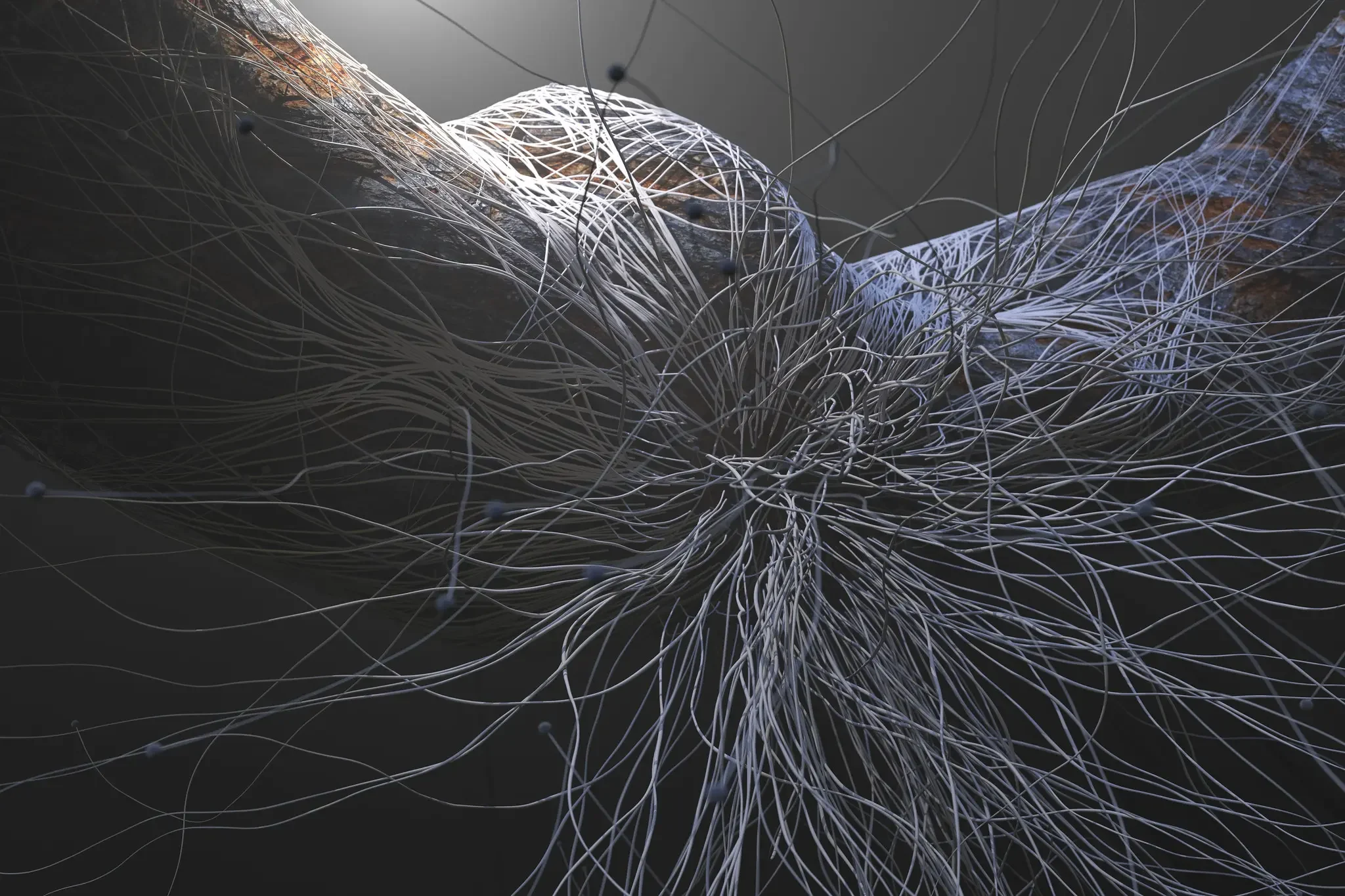
Every advance in engineering biology thus expands not only what we can do, but who and what becomes connected through those actions. After all, we are intervening in living systems already constituted by relationships among genes, organisms, ecosystems and societies. Fungal biology shows how literally this can be meant: the mycorrhizal networks that link plants into resource-and-signal-sharing communities are relationships all the way down. Engineering biological systems will therefore be determined less by biological capability than by relational capability: not by what we are able to make of life, but by what we prove able to cultivate with one another, and with everything else already living inside the fabric we are altering.
Associated Topics:
Topic
Cell and Gene Engineering
Topic
Synthetic Biology
Topic
Quantum Effects in Biology
Topic
Pathogen Biology
Topic
Fungal Biology