- Decoding infectivity
- Zoonotics and evolution across species
- Epidemiology and prediction
- Emerging opportunities for intervention
Sub-Topics
Video
Climate change is increasing the risk of disease outbreaks
Video
Learning from COVID 19 to Prepare the Response to the Next Systemic Crisis
Video
Voices from the #GESDASummit - Soumya Swaminathan & Chorh Chuan Tan
Video
Voices from the #GESDASummit - Jeremy Farrar
Video
Voices from the #GESDASummit - Patrick Aebischer
Current research in pathogen biology is already creating pathways towards important healthcare improvements and the means to contain future outbreaks and limit their impact. It also offers profound discoveries: pathogen biology informs all biology, because pathogens are excellent model organisms.
Tools like rapid genome sequencing, immunological profiling and AI will enable the speedy development of new treatments that are tailored to emerging diseases. Furthermore, improved surveillance tools have the potential to swiftly monitor and contain outbreaks, and potentially even prevent them. Achieving these goals requires interdisciplinary research and depends on publicly available systematic datasets.
Despite the progress, much of the potential of this research is not being fully harnessed. Low- and middle-income countries often have limited capacity to detect, monitor and contain outbreaks.1 This is partly the result of a lack of capacity in scientific fields like genomics and structural biology2 — and means many countries are effectively flying blind when it comes to pandemic preparedness. In other countries, governments are reducing their support for pathogen biology and related fields.3 Researchers are anxious for policy-makers to see the value of continued research and development, which will be crucial in averting the worst impacts of the next pandemic.4
KEY TAKEAWAYS
Pathogens — organisms that infect us and cause disease — remain a grave threat to health and well-being. One level of research into this threat aims to unpick the mechanisms by which pathogens enter our cells, effectively Decoding infectivity. Improved understanding of these mechanisms will enable novel treatments and preventative strategies. A related effort focuses on Zoonotics and evolution across species: how pathogens that infect animals make the leap to infecting humans, and how we might prevent this. Similar research enables improved Epidemiology and prediction: outbreaks can now be tracked using multiple data sources. Finally, many teams are focused on Emerging opportunities for intervention, which step beyond existing tools like antibiotics to explore phage therapies, mRNA vaccines and more.
Anticipatory Impact:
Three fundamental questions guide GESDA’s mission and drive its work: Who are we, as humans? How can we all live together? How can we ensure the well-being of humankind and the sustainable future of our planet? We asked researchers from the field to anticipate what impact future breakthroughs could have on each of these dimensions. This wheel summarises their opinions when considering each of these questions, with a higher score indicating high anticipated impact, and vice versa.
- Anticipated impact on who we are as humans
- Anticipated impact on how we will all live together
- Anticipated impact on the well-being of humankind and sustainable future of our planet

Decoding infectivity
Future Horizons:
10-yearhorizon
Pathogen genotypes reveal likely consequences of infection
25-yearhorizon
AI models eliminate animal research
Other work is improving our understanding of how the immune system interacts with other bodily systems in intricate ways. A seemingly simple infection might set off a complex cascade of changes within the body, for example, especially in conditions like long COVID. Conversely, children’s plasma proteome is remodelled by exposure to malaria, leading to natural immunity, and understanding this could lead to new therapeutics.5
Bringing such distinct datasets together is challenging but offers the potential for great insights.6 It has become possible to predict COVID-19 mortality solely by analysing gene expression in the patient’s blood, for example.7 Similarly, rich biological datasets are helping to explain long-established but mysterious patterns in infection biology. For instance, specific changes in the immune system may account for the much higher death rates from COVID-19 among the elderly.8
AI is mining insights from the vast datasets generated by research. For example, machine-learning models can predict how virus proteins will interact with host proteins,9 and forecast long-COVID outcomes based on immunological data.10 However, AI expertise and infrastructure is currently centred in the rich West: there is an urgent need to expand AI access in low and middle income countries, where it can enable biomedical progress even in low-resource settings.
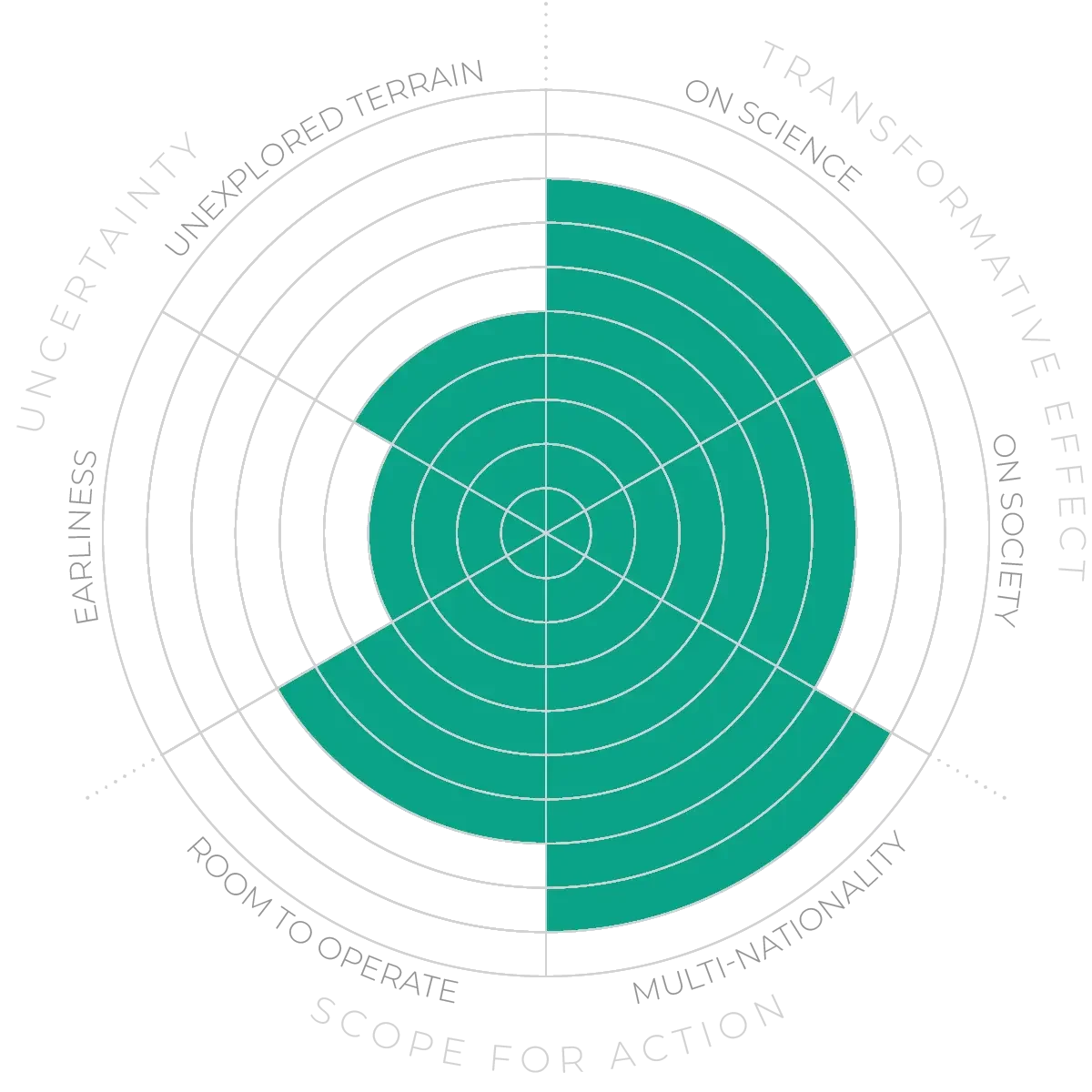
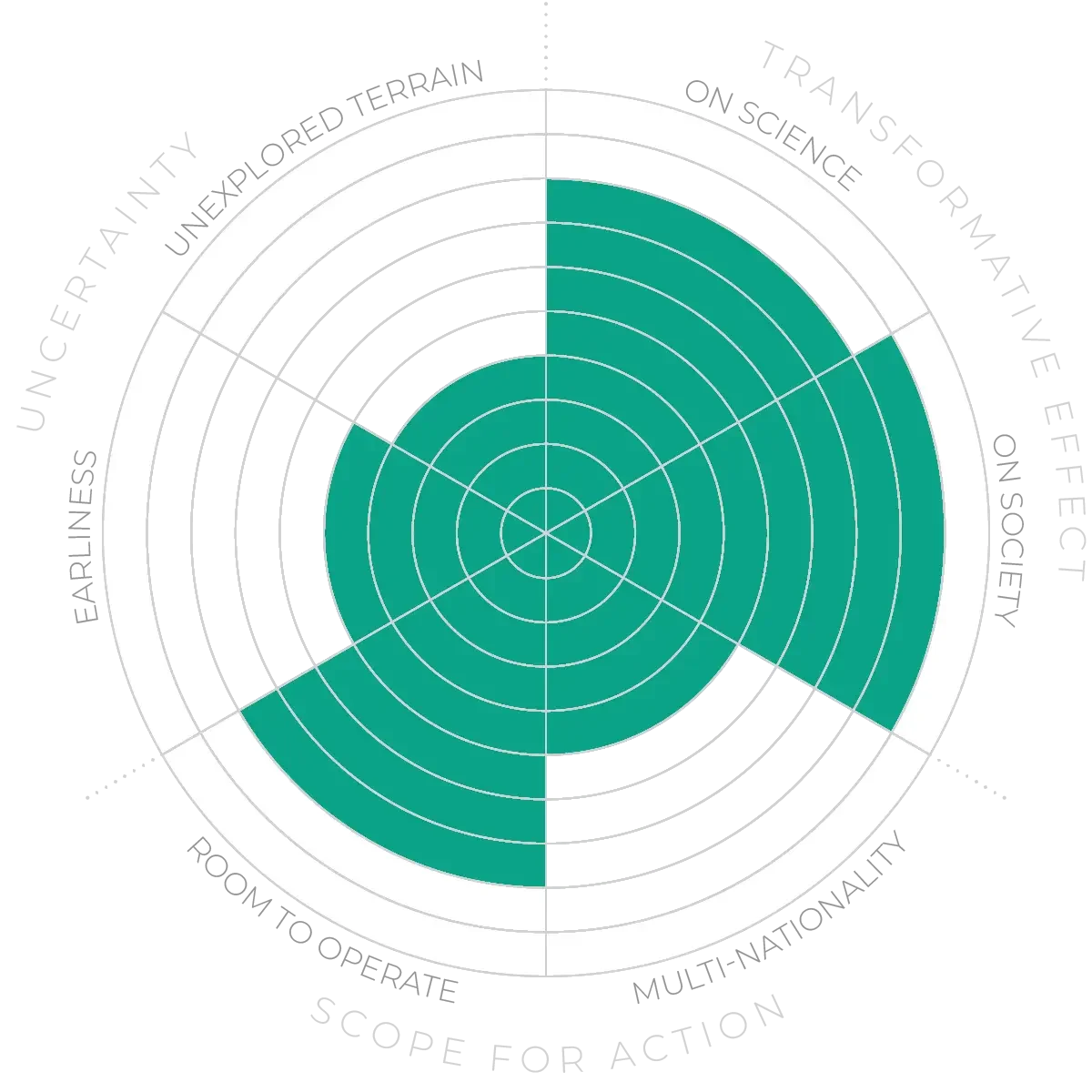
Decoding infectivity - Anticipation Scores
The Anticipation Potential of a research field is determined by the capacity for impactful action in the present, considering possible future transformative breakthroughs in a field over a 25-year outlook. A field with a high Anticipation Potential, therefore, combines the potential range of future transformative possibilities engendered by a research area with a wide field of opportunities for action in the present. We asked researchers in the field to anticipate:
- The uncertainty related to future science breakthroughs in the field
- The transformative effect anticipated breakthroughs may have on research and society
- The scope for action in the present in relation to anticipated breakthroughs.
This chart represents a summary of their responses to each of these elements, which when combined, provide the Anticipation Potential for the topic. See methodology for more information.

Zoonotics and evolution across species
Future Horizons:
5-yearhorizon
Viral traits can be anticipated
10-yearhorizon
A global surveillance system is put in place
25-yearhorizon
AI provides spillover predictions
Basic knowledge of microbial life also needs to be improved. Some potential zoonotic pathogens, like H5N1 bird flu, are fairly well-characterised.12 However, the majority of bacteria and viruses have not been studied at all. Researchers are working to change this, for instance by bringing all vertebrate-virus associations together in one database13 and by using AI to help document unknown viruses.14
With this knowledge base in place, it should be possible to predict which pathogens are likely to spill over into the human population and how dangerous they would be if they did.15 AIs trained on these datasets could help make such predictions, leading to early-warning systems.16
However, truly reliable predictions require a recognition that outbreaks are not caused just by highly pathogenic organisms but by human disturbance of ecosystems that allows novel diseases to come into contact with our populations. The One Health framework offers a set of tools with which to attempt this.17 Some models of this type have been developed.18 However, the One Health approach remains under-used: for example, there is little coordination between surveillance of animal diseases and of human diseases.
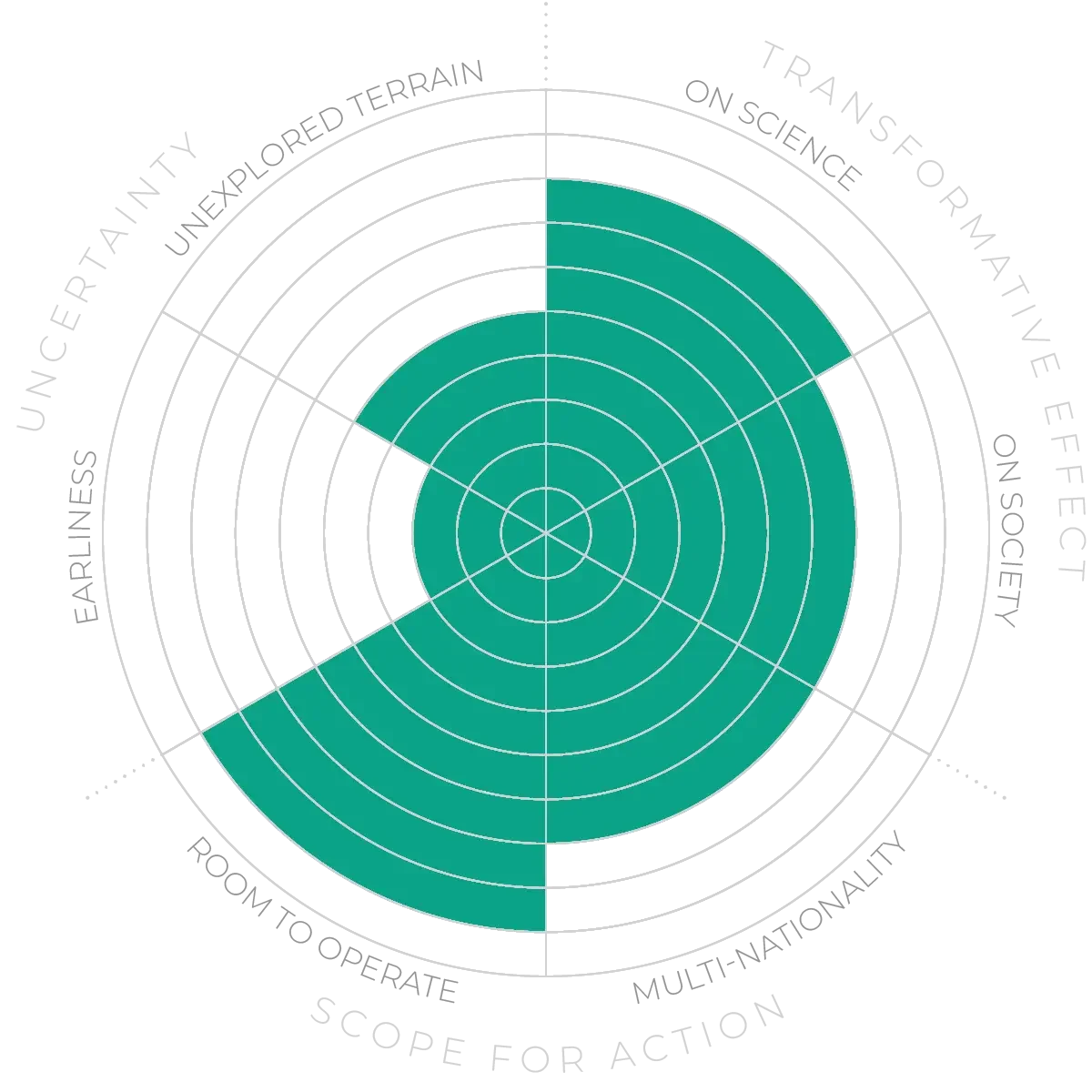
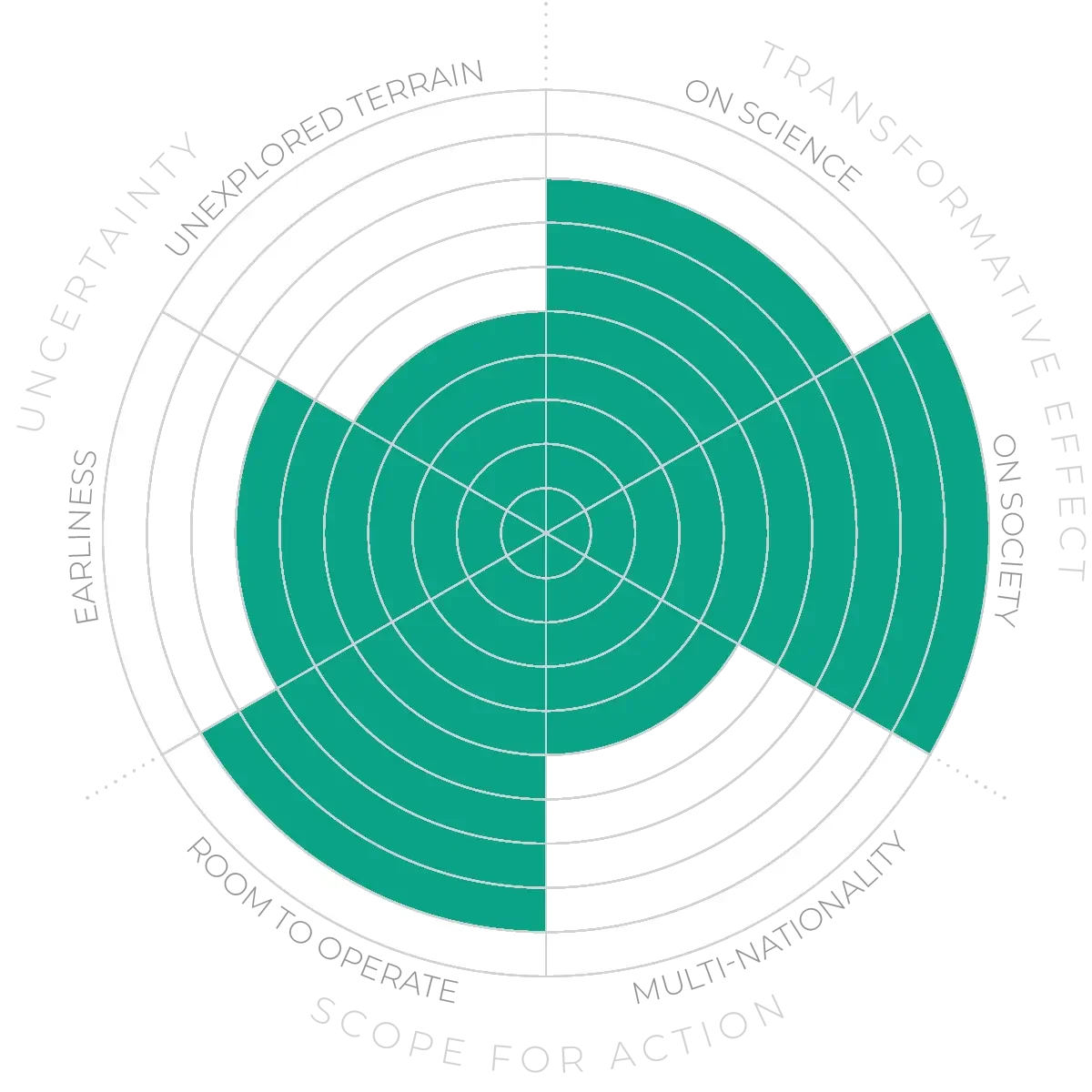
Zoonotics and evolution across species - Anticipation Scores
The Anticipation Potential of a research field is determined by the capacity for impactful action in the present, considering possible future transformative breakthroughs in a field over a 25-year outlook. A field with a high Anticipation Potential, therefore, combines the potential range of future transformative possibilities engendered by a research area with a wide field of opportunities for action in the present. We asked researchers in the field to anticipate:
- The uncertainty related to future science breakthroughs in the field
- The transformative effect anticipated breakthroughs may have on research and society
- The scope for action in the present in relation to anticipated breakthroughs.
This chart represents a summary of their responses to each of these elements, which when combined, provide the Anticipation Potential for the topic. See methodology for more information.

Epidemiology and prediction
Future Horizons:
5-yearhorizon
AI improves outbreak prediction
10-yearhorizon
New data sources come online
25-yearhorizon
A global picture of pathogen threats is established
Traditional pathogen surveillance methods such as contact tracing can now be combined with other data streams, from genomics20 to social media. For instance, improvements in DNA sequencing mean it is now feasible to rapidly reconstruct how a disease outbreak occurred, including tracing it back to source.21 An improved understanding of human factors that affect spread,22 such as malnutrition and genetic vulnerabilities, could significantly aid the tracking of epidemics.23
However, successfully integrating and using these datasets remains a challenge,24 especially in low- and middle-income countries where resources are limited. It is likely that our initial attempts to predict the course of outbreaks will underperform due to siloed systems, data latency, and interoperability barriers. While such systems may nevertheless offer some insight, it is likely to be too coarse or arrive too late to be used as the basis for effective action.25
Several major opportunities exist. An improved understanding of the interactions between pathogens, which affect when and where outbreaks arise, could enable better predictions. A biobank of infection samples from patients would be a valuable resource for both experimental and computational research. And there is considerable potential to train AI on outbreak datasets and use it to make predictions,26 but so far little has been done — in part due to data-access limitations.
The most effective data ecosystems are likely to be decentralised and trust-based, rather than centralised and coercive. West Africa is a good prototype: pathogen surveillance systems there blend formal and informal health intelligence. Truly resilient systems will arise from diversity, redundancy and local agency, not from top-down architectures. One possible model is to create regional “epidemic foresight nodes” that can detect patterns and simulate response scenarios.

Epidemiology and prediction - Anticipation Scores
The Anticipation Potential of a research field is determined by the capacity for impactful action in the present, considering possible future transformative breakthroughs in a field over a 25-year outlook. A field with a high Anticipation Potential, therefore, combines the potential range of future transformative possibilities engendered by a research area with a wide field of opportunities for action in the present. We asked researchers in the field to anticipate:
- The uncertainty related to future science breakthroughs in the field
- The transformative effect anticipated breakthroughs may have on research and society
- The scope for action in the present in relation to anticipated breakthroughs.
This chart represents a summary of their responses to each of these elements, which when combined, provide the Anticipation Potential for the topic. See methodology for more information.

Emerging opportunities for intervention
Future Horizons:
5-yearhorizon
Breakthrough therapies come online
10-yearhorizon
Novel tools create research opportunities
25-yearhorizon
Generalised vaccines bring therapeutic advances
Some new therapeutics have already found widespread use. mRNA vaccines were deployed in vast numbers against covid-19, after decades in development hell. So were monoclonal antibodies. Gene editing for inherited diseases is also increasingly mainstream.
Other promising approaches remain largely untapped. One such example is phage therapy — using viruses called bacteriophages to treat bacterial infections.27 Phage therapy could be used to treat antimicrobial-resistant bacteria, saving many lives.28 A key challenge is to better characterise the interactions between the viruses and their bacterial hosts,29 which will help ensure that the chosen phages actually destroy their target organism.30
A second avenue of attack is to hamper the evolution of antimicrobial resistance, ensuring that antibiotics remain useful for longer. This requires an improved understanding of bacterial evolution.31 Key challenges include predicting the behaviour of mobile genetic elements32 and improving our understanding of how drug treatments trigger the evolution of resistance.33,34
Techniques such as cryogenic electron microscopy and AI are enabling rapid progress in our understanding of molecular interactions such as protein-protein interactions.35 This promises a multitude of new therapeutic targets that could be targeted rapidly using the tools of synthetic biology. Existing drugs could also be repurposed.36
Finally, the rapid emergence of new pathogens is spurring attempts to develop broad-spectrum treatments such as a pan-coronavirus vaccine.37 Multiple methods are being pursued: for instance, it may be possible to develop a “universal antibody vaccine” based on monoclonal antibodies.38
Emerging opportunities for intervention - Anticipation Scores
The Anticipation Potential of a research field is determined by the capacity for impactful action in the present, considering possible future transformative breakthroughs in a field over a 25-year outlook. A field with a high Anticipation Potential, therefore, combines the potential range of future transformative possibilities engendered by a research area with a wide field of opportunities for action in the present. We asked researchers in the field to anticipate:
- The uncertainty related to future science breakthroughs in the field
- The transformative effect anticipated breakthroughs may have on research and society
- The scope for action in the present in relation to anticipated breakthroughs.
This chart represents a summary of their responses to each of these elements, which when combined, provide the Anticipation Potential for the topic. See methodology for more information.